DV basics by Matt Ottewill
IntroductionThere are many formats of digital video in the consumer and professional world. For example all of these can record and/or playback some form of digital video ...
DV is one of the digital video standards. The DV format was established as a semi-pro/consumer digital alternative to analogue video standards. DV is far superior to VHS but inferior to broadcast digital video. 3 types of DV tape/format1. DV (or MiniDV)DV (usually referred to as MiniDV) uses a small tape cassette to record 60 minutes of PAL or NTSC video and audio. This is the most common semi-pro/consumer format. 2. DVCAMDVCAM produces the same data as MiniDV (same quality) but records it to a larger more robust tape. 3. DVC PRODVC Pro uses professional grade tape and can also record in a higher quality video mode known as DVC Pro 50 which creates file sizes twice the size of MiniDV and DV CAM.
|
CCDsWhen light enters the lense of a DV camcorder it is focused onto a CCD (Charge Coupled Device.) The CCD is the bit that converts light from the lense into digital data. Cheaper miniDV camcorders employ 1 CCD which performs the conversion process less effectively than camcorders fitted with 3 CCDs. The amount of data coming from both systems is identical, but a 3 CCD camcorder will produce better colour images with a wider dynamic range (light and dark). More expensive miniDV, DVCAM, DVC Pro camcorders will have 3 CCDs. DV codecThe CCD from a DV camcorder produces huge amounts of data (1.4Gb per min) which must be compressed (to 216Mb per min) before recording to tape. The DV codec (compression/decompression software) does this.
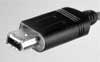
Video recording modesSP & LPDV camcorders can record in SP (standard play) record mode (60 mins a tape) or LP (long play) record mode (120 mins a tape). LP mode is not supported by most desktop editing applications. PAL & NTSCClick here for a description of the European and American DV/TV formats. Audio modesDV has a 4-track 12-bit 32Khz and a 2-track 16-bit 48Khz uncompressed audio mode. 2 channel 16-bit 48kHz is required for compatibility with desktop editing software. Camcorder have built-in microphones of questionable quality. It is always woth paying extra for a model which allows an external microphone to be connected. TimecodeDV data includes a SMPTE like timecode in the form of hours, minutes, seconds and frames (eg 00:34:12:23). This is recorded to the tape along with picture and audio data and is used by editing software to identify the location of clips and to automate transfer to the computers hard drive (a process called Batch Capture with Device Control). InterconnectionFireWire has been adopted as the interconnection method for transferring DV data between camcorders and computers, where it can be edited. Sony calls FireWire iLink. A FireWire cable for DV camcorders has a mini firewire plug at the camera and a standard one for the computer. DEVICE CONTROL / BATCH CAPTUREThe DV format includes a protocol for remotely controlling a camcorders tape transport from the computer. This enables automated capture of multiple clips (Batch Capture) from a tape according to their timecode in and out points. These instructions are sent from the editing software to the camcorder down the FireWire cable.
|