
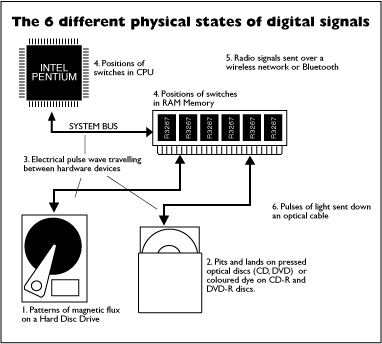
The 6 different physical states of digital signals
Introduction
Modern computing involves using transistors (simple switches) to generate electrical pulse waves (on/off) which can represent 1's and 0's (binary). These 1's and 0's can take many forms as the travel between computers and through the various hardware components of a computing system.
In a computer system binary data may exist in several different forms at different times ...
- 1. Patterns of magnetic flux
2. Pits and lands or a light sensitive surface on an optical disc
3. Electrical pulse waves
4. Positions of switches
5. Radio signals sent over a wireless network
6. Pulses of light sent down an optical cable
 1. Electrical pulse wave
When traveling between components such as ...
a CD disc and RAM chip
a MIDI keyboard and MIDI interface
a modem and the internet
a scanner and RAM chip
etc
... binary is represented by an electrical pulse wave, which switches between on (1s) and off (0s) states (effectively increasing and decreasing voltage/pressure).
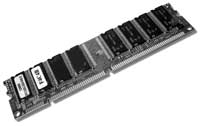
2. Positions of switches (RAM & CPU etc)
When a binary electrical pulse wave has arrived at a RAM, FlashRAM or ROM memory module or the CPU, the waves on/off states are translated into on/off positions of millions of switches (transistors) which temporarily "hold" the binary values.
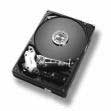
3. Patterns of magnetic flux (on floppy, removable& hard disks)
On the surface of a floppy disc or hard drive, changes in magnetic flux (essentially magnetism equivalent of air pressure (dbs) or electrical pressure (voltage) denote 1s and 0s. More on hard disc drives here.
 4. Pits and lands / light sensitive surfaces (optical media)
Pressed / manufactured optical discs
On the surface of a pressed /commercially manufactured optical disc (CD / DVD ROM) a pit is essentially an indentation (pressed from a glass master) and a land is an area unaffected. A reading laser shines light onto the surface of the disc. The light takes longer to reflect from a pit than a land. This discrepancy in the wavelength of the reflected light allows the laser to produce 1s and 0s.
CD-R/RW and DVD-R/RW
CD-R/RW and DVD-R/RW work differently by using a laser to change the colour of a light sensitive surface making them susceptible to damage from direct light sources such as sunlight.
 5. Radio signals sent over a wireless network
Binary 1s and 0s can be transmitted over a wireless network in the form of radio waves.
6. Optical signals
Binary 1s and 0s can be transmitted down an optical cable in the form of pulses of light.
Related downloads
None at present
